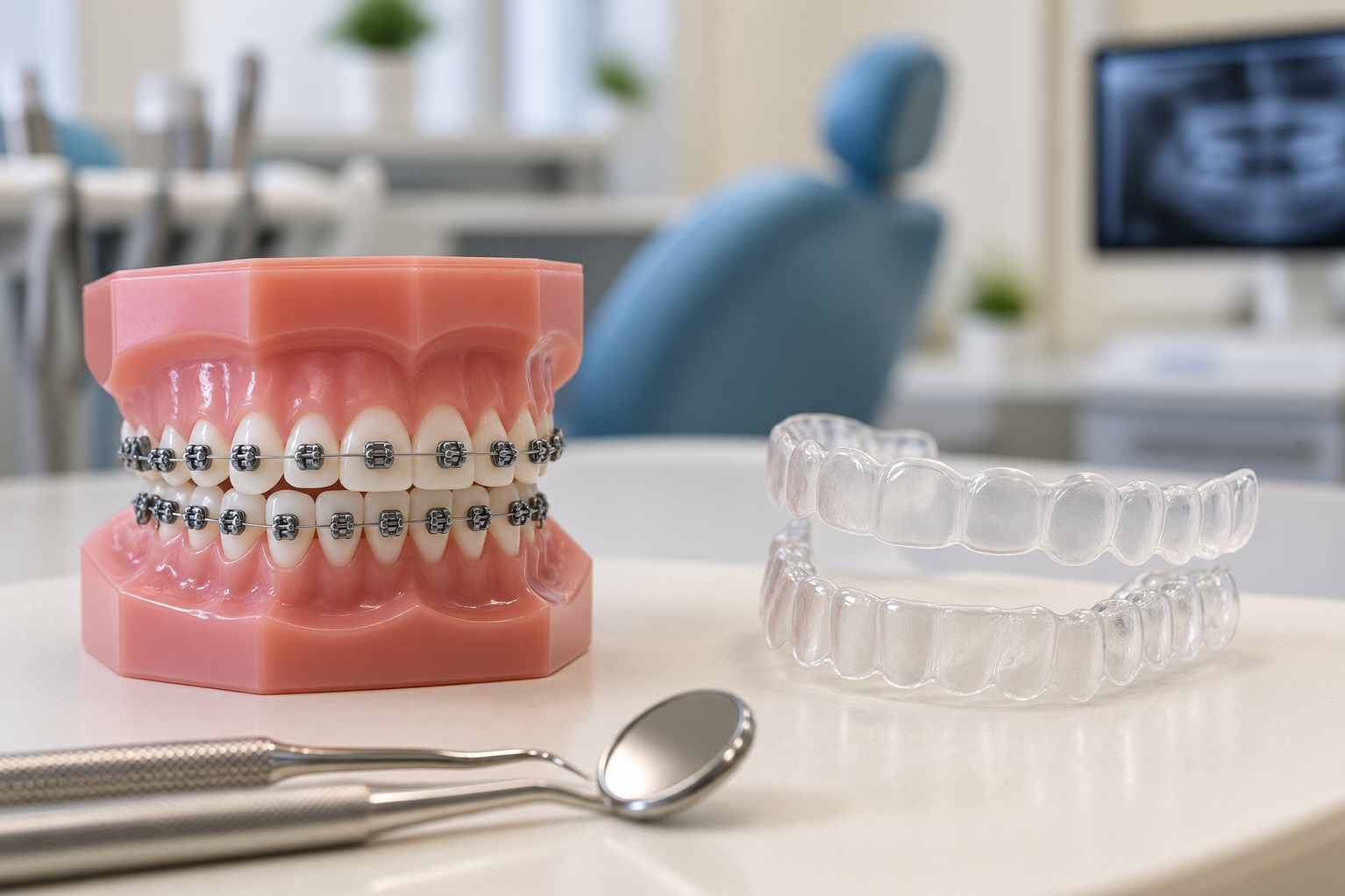
Patients frequently begin orthodontic treatment with a simple goal such as straightening crowded front teeth. A proper orthodontic plan looks beyond appearance and considers how the upper and lower teeth meet, the available space, gum health and the type of tooth movement required. Braces remain one of the established methods for achieving controlled orthodontic movement.
Understanding how fixed appliances differ from removable alternatives can make treatment decisions more practical.
How fixed braces work
Brackets are attached to the teeth and connected with orthodontic wires. Adjustments generate controlled forces that gradually reposition teeth.
Because the appliance remains attached, treatment does not depend on remembering to put it back in after meals. This can be useful when predictable continuous wear is important.
Fixed appliances may be used for a wide range of alignment and bite problems, including cases requiring movements that can be challenging with removable systems.
Where removable aligners differ
Clear aligners use a sequence of removable trays. Their discreet appearance and removability can be attractive to adults, particularly those concerned about professional or social appearance.
However, removability also creates responsibility. The trays need to be worn for the prescribed duration each day.
The question is therefore not simply which option looks better. Important considerations include:
- Complexity of tooth movement
- Bite relationship
- Gum and bone support
- Patient age and growth
- Existing restorations
- Ability to follow wear instructions
- Oral hygiene habits
- Lifestyle preferences
Treatment time should not be compared by appliance alone
Patients sometimes assume that one orthodontic system is automatically faster.
In reality, treatment duration depends on the starting problem, biological response, planned movements, missed appointments, appliance breakages and patient cooperation.
A relatively simple alignment problem can take much less time than correction of a complicated bite regardless of the appliance selected.
Preparing the mouth for orthodontics
Before active treatment, existing oral disease should be controlled. Cavities and gum inflammation can become more difficult to manage once orthodontic appliances are present.
Patients should receive clear instructions about brushing, interdental cleaning and dietary habits.
Fixed appliances can trap plaque around brackets, making careful cleaning particularly important. With removable aligners, cleaning may be easier, but placing trays back over poorly cleaned teeth creates its own risks.
Benefits and risks of braces
Fixed orthodontics offers precise control and does not rely on the patient remembering to wear the appliance.
Potential disadvantages include temporary discomfort, food restrictions, bracket breakages and increased cleaning demands.
Orthodontic treatment of any type can carry risks including:
- Tooth decay when plaque control is inadequate
- Gum inflammation
- Root shortening in some patients
- Temporary tenderness
- Unwanted tooth movement
- Relapse after treatment
Individual risks should be discussed before treatment begins.
What happens when the braces come off
Removing the appliance is not the end of orthodontic care. Teeth can move after treatment, particularly during the early retention period.
Retainers help maintain the corrected position. The recommended type and duration vary according to the case.
For adults and families in Kothrud and surrounding areas of Pune, Maharashtra, choosing an orthodontic system should therefore involve both the active treatment and the commitment to retention afterward.
Dr. Nair's Dental Care and Implant Center can assess alignment, bite and oral health before discussing suitable orthodontic options.
Frequently asked questions
Are braces only for teenagers?
No. Adults can also undergo orthodontic treatment when their teeth and supporting tissues are suitable.
Do fixed appliances hurt?
Temporary pressure or tenderness can occur after placement and adjustments.
Are clear trays always better for adults?
They may suit many adults, but appliance choice should be based on the required tooth movements as well as personal preference.
Will teeth stay straight permanently?
Teeth can shift throughout life. Retainer use is an important part of maintaining the orthodontic result.
Keywords