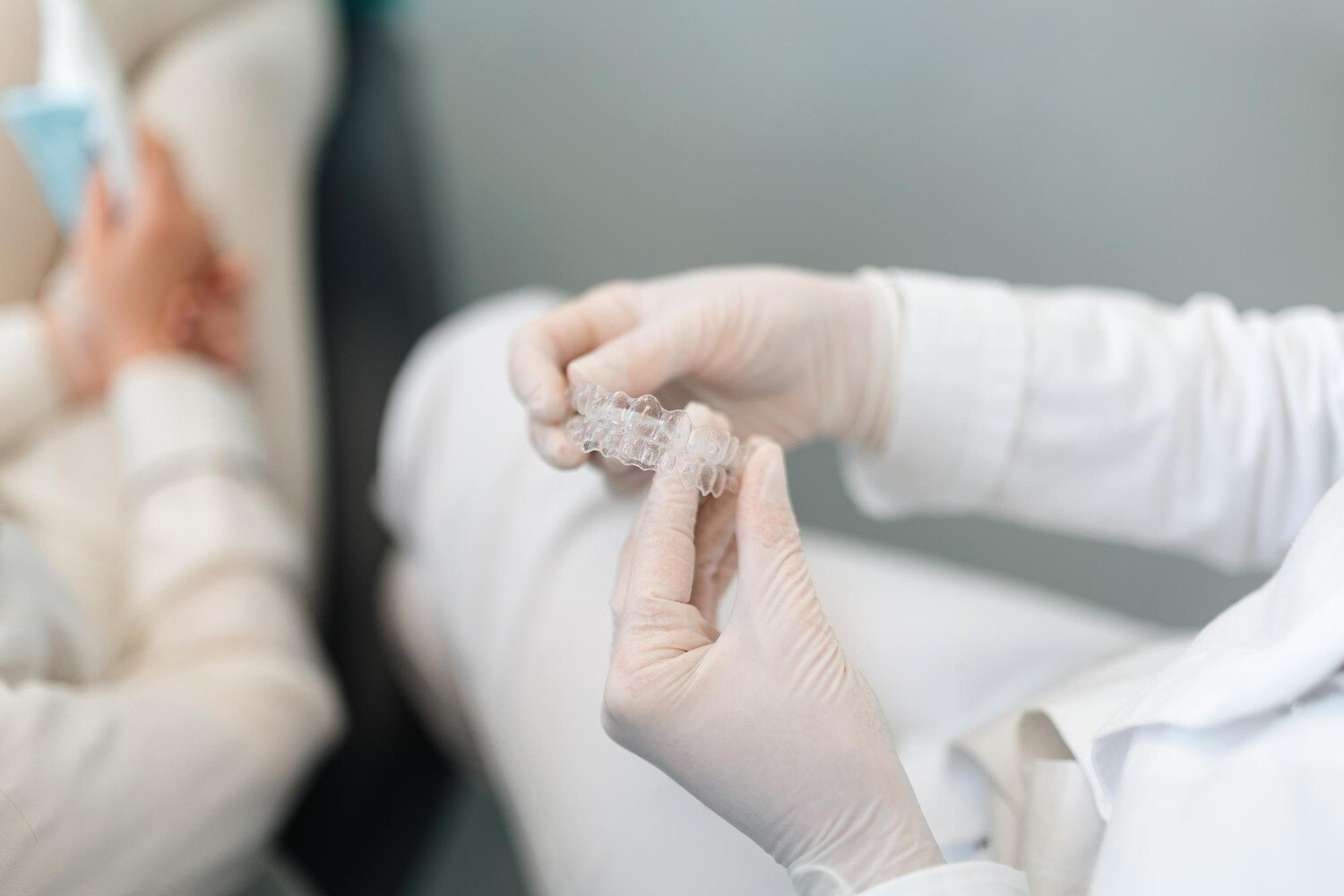
A clear-aligner consultation should do more than produce a digital preview of straighter teeth. The dentist must establish that your teeth, gums, roots, bite, jaw relationships, and daily habits can support safe and predictable movement. By the end, you will know which checks matter, when additional imaging is justified, and why your treatment plan may include attachments, enamel reduction, elastics, braces, or referral.
Key takeaways
- Treat active decay and gum disease before applying orthodontic pressure.
- Ask whether your issue comes from tooth position, bite, or jaw structure.
- Expect photographs, digital scans, and X-rays before treatment planning.
- Confirm you can wear, clean, and replace trays as instructed.
Are your teeth and gums healthy enough to move?
Treatment should not start until your teeth and gums are stable enough to tolerate controlled pressure. An Invisalign dentist uses a clear aligner assessment to diagnose risks, not simply to create a digital scan.
1. Review your medical and dental history. Tell the clinician about diabetes, smoking, medicines that affect bone or gum healing, allergies, previous orthodontic treatment, jaw-joint symptoms, dental trauma, and earlier gum problems. Include recent pain, swelling, bleeding, or tooth sensitivity.
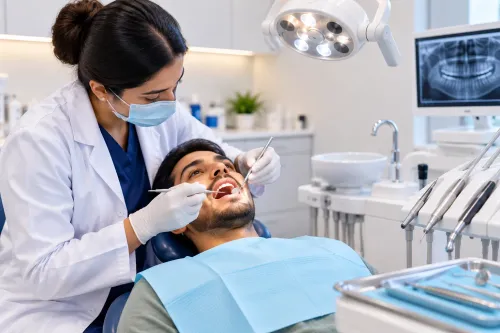
2. Examine every tooth and restoration. The check looks for untreated cavities, failing fillings or crowns, enamel cracks, worn surfaces, loose teeth, abscesses, and impacted teeth. Decay or infection under an aligner can worsen because the tray holds plaque and limits saliva contact.
3. Assess gum health and bone support. The dentist checks plaque control, bleeding, gum recession, pocket depths, tooth mobility, and signs of periodontitis. Moving teeth through inflamed tissues can increase attachment and bone loss, so active gum disease must be treated first.
4. Examine your bite, jaw joints, and facial balance. The clinician records crowding, spacing, overbite, underbite, crossbite, open bite, midlines, and tooth rotations while checking whether the problem is dental or skeletal. Aligners move teeth; they do not reliably correct a major jaw-size or jaw-position discrepancy.
5. Complete the records needed for safety. Photographs and an intraoral scan show tooth positions, but a panoramic, periapical, or cephalometric X-ray is added when the roots, bone, unerupted teeth, or jaw relationships need investigation. A 3D scan is reserved for specific diagnostic questions.
Does the problem involve tooth position, bite, or jaw structure?
A digital scan can show where teeth sit, but it cannot reveal whether the jaw relationship is causing the problem. The clinician combines the bite examination with facial and jaw assessment, photographs, scans or impressions, and radiographs when indicated.
The assessment looks for:
- Overbite and overjet: how much the upper teeth cover or project beyond the lower teeth.
- Underbite: whether the lower teeth sit ahead of the uppers, and whether the cause is tooth position or lower-jaw position.
- Crossbite: whether individual teeth or a jaw-width discrepancy puts upper teeth inside the lowers.
- Open bite: whether teeth fail to meet when you close.
- Midlines, crowding, spacing, and rotations: whether tooth position is the main source of the irregularity.
- Functional shifts: whether closing your jaw makes it slide to one side.
The clinician also checks facial symmetry, jaw size and position, jaw-joint movement, eruption status, remaining growth, and root development. Age alone does not establish candidacy; an apparently simple problem can change while permanent teeth erupt.
A major jaw-size or jaw-position discrepancy will not reliably respond to tooth movement alone. The plan may need growth modification or an orthognathic-surgery assessment. Aligners also have limits with severe rotations, significant extrusion, and large bodily movements, so attachments, elastics, or fixed treatment may be needed for control.
Which records and X-rays are needed for a safe plan?
Photographs and an intraoral digital scan show tooth positions and visible bite relationships, but neither reveals roots, supporting bone, hidden decay, or an unerupted tooth. A scan that looks orderly can still conceal root damage, bone loss, infection, or a jaw discrepancy that affects whether aligner treatment is safe.
Your records should include relevant medical and dental history, previous X-rays, details of crowns, bridges, implants, veneers and large fillings, plus clinical photographs and an intraoral scan or impressions. The dentist orders imaging when the examination, symptoms, tooth position or treatment plan creates a specific question.
| Imaging | What it shows | When it helps |
|---|---|---|
| Panoramic X-ray | Both jaws, roots, developing or impacted teeth, missing teeth and broad bone or pathology changes | Screening for hidden problems before moving several teeth |
| Cephalometric X-ray | Side-view relationships between the teeth, jaws and facial bones | Testing whether an overjet, open bite or profile concern is skeletal |
| Periapical X-ray | A small area from the crown through the root tip and surrounding bone | Checking a painful tooth, root abnormality, infection, bone loss or a suspicious filling |
| 3D dental scan | Three-dimensional views of teeth, roots, bone and nearby structures | Planning complex movements, impacted teeth, implants or suspected jaw and bone limitations |
A 3D dental scan is not routine for every aligner patient; use depends on the diagnostic question and the scan’s radiation exposure. The clinician should explain why each image is needed and use the findings—not the digital model alone—to approve treatment.
Is there enough space, and can aligners control the planned movements?
A clear-aligner plan is suitable only when the available space and the trays’ movement limits match the correction required. The dentist measures tooth crowding, spacing, overbite, midlines, and tooth rotations, then checks the roots, bone support, tooth shape, and bite on the scan, photographs, and indicated X-rays.
The proposed digital simulation is a planning aid, not proof that every movement will occur. The clinician tests whether:
- Mild tipping, limited rotations, and small spacing changes can be delivered predictably.
- Severe tooth rotations, especially on rounded teeth, significant extrusion, large bodily movements, and some molar movements exceed aligner control.
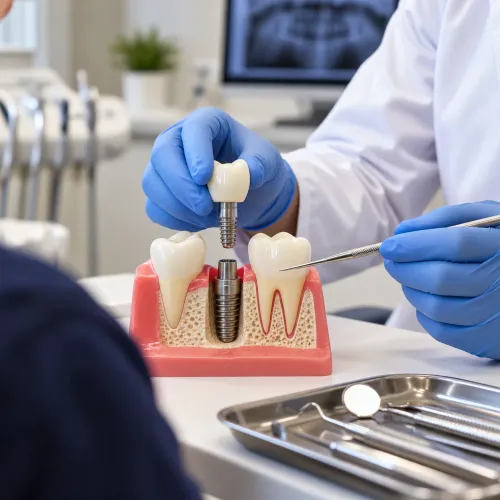
- Existing crowns, veneers, bridges, implants, short crowns, or worn teeth can hold attachments and receive the planned forces. An implant cannot move like a natural tooth.
- Expansion moves teeth within the supporting bone rather than simply tipping their crowns outward.
If space is short, the dentist calculates whether interproximal reduction can safely remove a specific amount of enamel from specific contact points. A generic simulation must not decide this alone; excessive reduction or damaged enamel can cause sensitivity and raise decay risk.
Attachments and elastics can improve grip, rotation, extrusion, and bite correction. A plan may instead require extraction, a short phase of braces, or referral to an orthodontist or oral and maxillofacial specialist when crowding is severe, movements are poorly controlled, or a jaw-size discrepancy—not tooth position—is the main problem.
If the required correction cannot be predicted safely, declining aligners is the appropriate decision.
What must you be able to maintain after the trays are delivered?
You must be able to wear the trays for 20 to 22 hours wear each day, removing them mainly for meals, anything except water, brushing and flossing. If you regularly leave them out, teeth can stop tracking, treatment can take longer, and replacement trays or refinements may be needed.
Before accepting the plan, confirm:
- How often will reviews occur, and what happens if an attachment loosens or a tray no longer fits?
- What cleaning routine covers both your teeth and aligners? Good aligner hygiene matters because trapped plaque increases the risk of decay and gum inflammation.
- How are attachments, tooth filing between teeth, or crowded areas incorporated into your daily brushing and flossing?
- Are refinements included in the proposed process, and what could cause extra appointments or trays?
- Which orthodontic retainers will you receive after active treatment, and will you need full-time wear initially followed by nighttime wear indefinitely?
| Requirement | What to confirm | If missed |
|---|---|---|
| Wear | 20 to 22 hours daily | Poor tracking or extended treatment |
| Hygiene | Brushing, flossing and tray cleaning | Plaque, cavities or gum problems |
| Reviews | Appointment frequency and emergency contact | Problems remain unnoticed |
| Retention | Retainer type, timing and replacement | Teeth can relapse |
At Dr. Nair’s Dental Care and Implant Center, ask the clinician to record these responsibilities in your treatment plan rather than treating them as aftercare details. Clear aligner treatment ends with retention, not with the last active tray.
Related services
Alignment Teeth Alignment Treatment for a Healthy, Confident Smile Achieve a straighter, healthier smile with our professional teeth alignment treatments. |
Modern Braces, Designed for Better Smiles Modern Braces, Designed for Better Smiles Achieve a healthier, more confident smile with modern orthodontic braces. |
Frequently asked questions
Do teeth and gums need to be healthy before clear aligner treatment?
Yes. Active decay, gum disease, infection, or unstable dental work should be assessed and treated before teeth are moved.
Can clear aligners correct jaw problems?
Aligners move teeth, but they do not correct every skeletal jaw problem. Your dentist must distinguish tooth position from bite and jaw structure.
Which records and X-rays are used for clear aligner planning?
A safe assessment can include clinical photographs, digital scans or impressions, bite records, and X-rays selected to check roots, bone, unerupted teeth, and jaw relationships.
How does a dentist decide whether clear aligners can create enough space?
The plan must show where space will come from and whether aligners can control movements such as rotation, tipping, intrusion, or tooth translation.
What do you need to maintain after receiving clear aligners?
You need to wear trays for the prescribed time, remove them for eating unless instructed otherwise, clean them and your teeth, attend reviews, and use retainers after treatment.