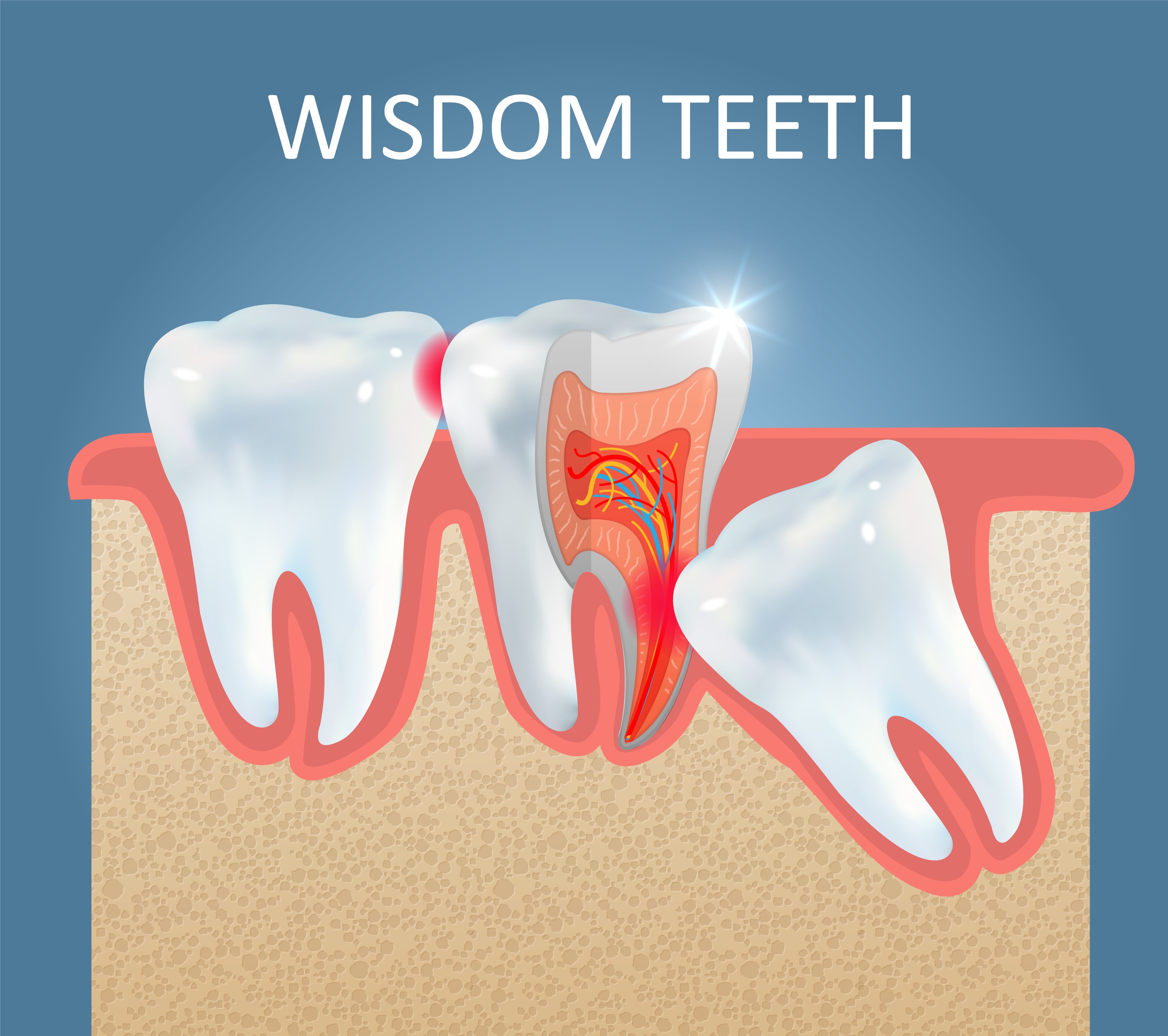
Wisdom teeth are the final permanent molars to develop, but there is not always enough space for them to erupt normally. Some remain completely beneath the gum, while others emerge only partially or grow at an unfavourable angle. Wisdom tooth removal may be considered when these teeth cause disease, repeated symptoms, or a significant risk to surrounding structures.
The need for removal should be based on clinical findings rather than simply the presence of a wisdom tooth.
Why wisdom teeth sometimes cause problems
A partially erupted tooth can create an area where food and bacteria are difficult to remove. This may contribute to inflammation around the gum.
Other potential problems include:
- Repeated pain or swelling
- Decay in the wisdom tooth
- Decay affecting the adjacent molar
- Gum disease around the area
- Infection around a partially erupted tooth
- Certain cystic changes
- Damage associated with an impacted tooth
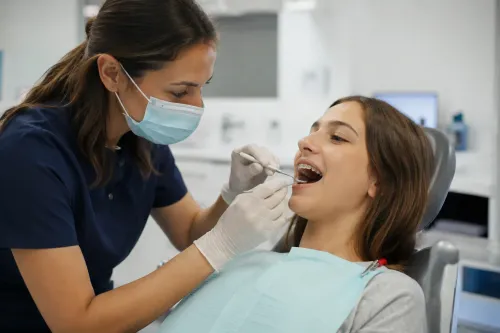
An examination and appropriate dental imaging help determine the position of the tooth and its relationship to nearby structures.
What happens during removal
The procedure varies according to whether the tooth has erupted normally or remains impacted.
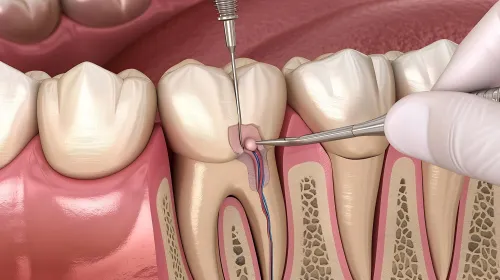
A straightforward erupted tooth may sometimes be removed relatively simply. Impacted teeth can require a surgical approach involving a small gum incision, removal of surrounding bone, or division of the tooth into sections.
Local anaesthesia is commonly used. The clinician discusses additional anaesthesia or sedation considerations when relevant to the procedure and patient.
For lower wisdom teeth, their relationship to nearby sensory nerves may be particularly important. Imaging helps the surgeon evaluate this anatomy before proceeding.
Understanding recovery time
Swelling and discomfort are commonly most noticeable during the early recovery period. Jaw stiffness and mild bruising can also occur after more involved surgery.
Many patients can resume routine non-strenuous activities within a few days, but recovery varies according to the complexity of surgery and individual healing.
The extraction site itself takes longer to heal than the period of noticeable discomfort.
Preparing before the appointment
Patients should provide an accurate medical history and a list of medications, including blood-thinning medicines and supplements. Medication should not be stopped independently; any necessary changes should be discussed with the appropriate clinician.
Before surgery, clarify:
- Whether fasting is required
- What type of anaesthesia is planned
- Whether someone needs to accompany you
- Which medicines should be taken as usual
- What foods to have available during recovery
Planning these details beforehand can make the first day after surgery considerably easier.
Protecting the extraction site afterward
The blood clot that forms in the socket plays an important role in early healing. Patients should follow their surgeon's instructions carefully to avoid disturbing it.
Typical recommendations may include eating softer foods initially, avoiding vigorous rinsing during the earliest stage of healing, maintaining careful oral hygiene, and avoiding smoking or tobacco.
Prescribed or recommended medication should be used according to instructions.
Potential complications can include dry socket, infection, bleeding, swelling, nerve disturbance and problems involving nearby teeth or structures. Severe or increasing pain, persistent bleeding, fever, difficulty swallowing, or worsening swelling requires prompt review.
Does every wisdom tooth need extraction
No. A wisdom tooth that is healthy, functional, cleanable and not causing disease may sometimes be monitored instead.
For adults in Kothrud and the wider Pune, Maharashtra, region, the decision is therefore better made after examining the actual tooth position rather than assuming that all third molars should be removed.
Dr. Nair's Dental Care and Implant Center evaluates wisdom teeth in the context of symptoms, dental imaging, neighbouring teeth and surgical complexity.
Frequently asked questions
Will there be swelling after removal?
Some swelling is common, particularly following surgical extraction.
Can I brush my teeth afterward?
Oral hygiene remains important, but the surgical site needs to be handled according to the postoperative instructions provided.
When can normal food be resumed?
This depends on comfort and healing. Patients generally progress gradually from softer foods.
Can an impacted wisdom tooth be painless?
Yes. Impacted teeth do not always cause symptoms, which is why clinical and radiographic findings are important when deciding whether monitoring or intervention is appropriate.
Keywords